Launch offer — valid today only

📄 Digital book in PDF · read it on your phone or print it

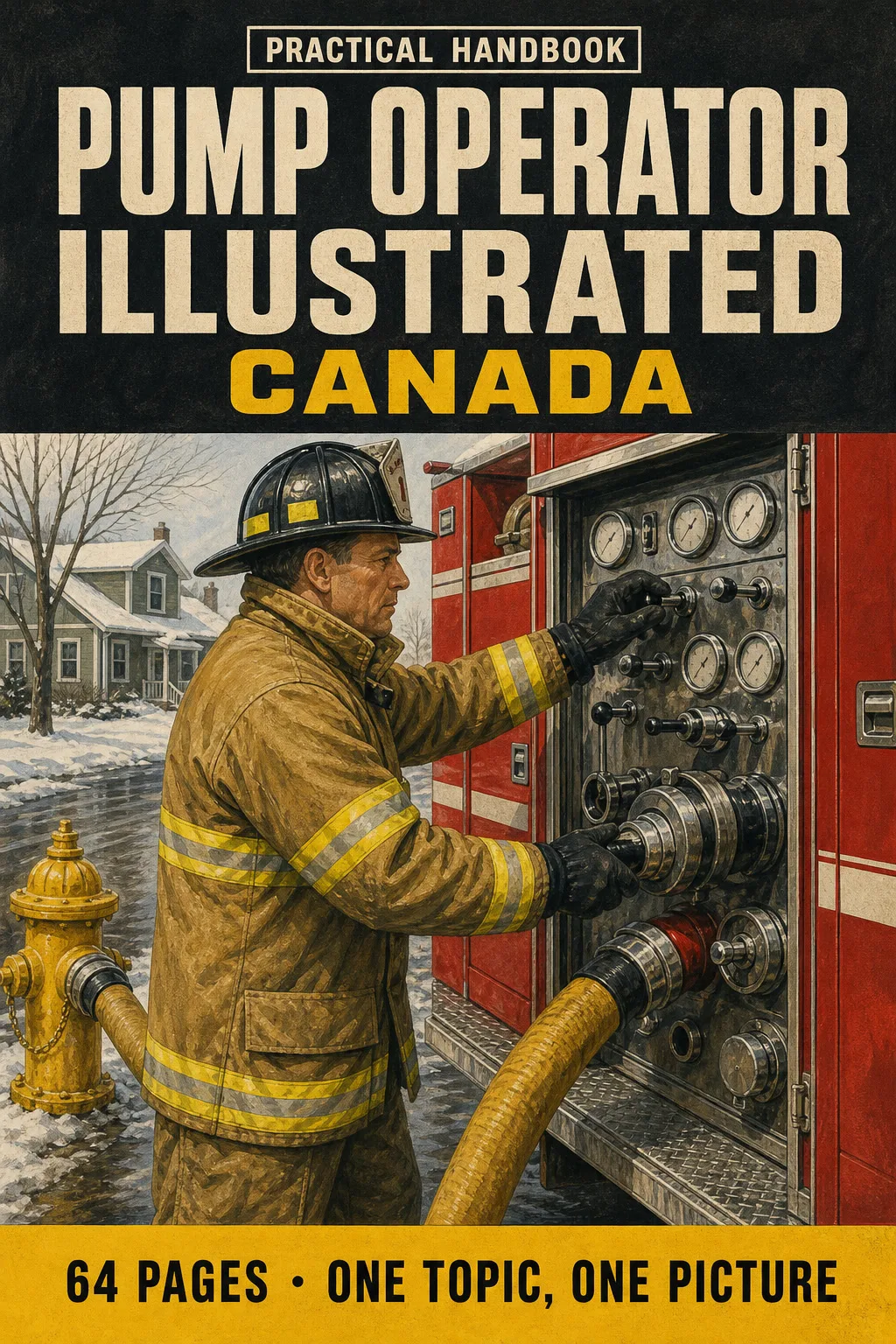
Pump Operations and NFPA 1002 in Drawings PDP in the Same 4 Steps

The pumper and its checks, the centrifugal pump, priming and drafting, hydrant lays, friction loss, pump discharge pressure in kPa and the pump panel. Every topic has its own page: the drawing first, then what you need to remember. 64 illustrated pages.

START STUDYING THIS WAY

🔒 Secure checkout · PDF by email · 30-day guarantee

Every topic, its own pageEach pump topic drawn, with the explanation right beside it
64 illustrated pages7 parts, from what NFPA 1002 asks of you to the practical evaluation checklist
Up-to-date sourcesNFPA 1002, O. Reg. 343/22 and NFPA 1911
PDF by emailFormat

Look Inside the Book

Every page has one big drawing and a box with the numbers and steps you need to know:

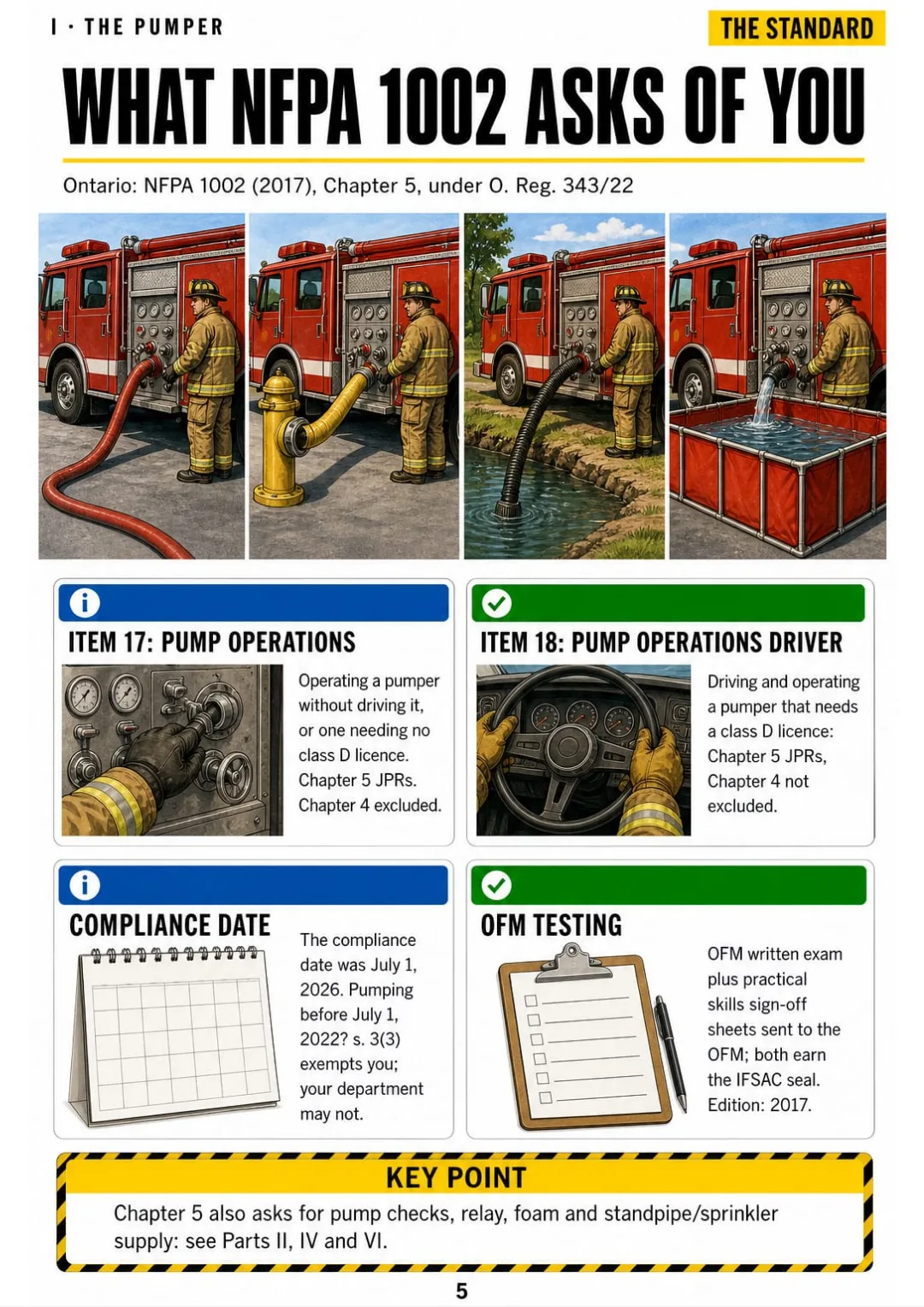
O. Reg. 343/22, items 17 and 18: NFPA 1002 (2017) Chapter 5, compliance date July 1, 2026
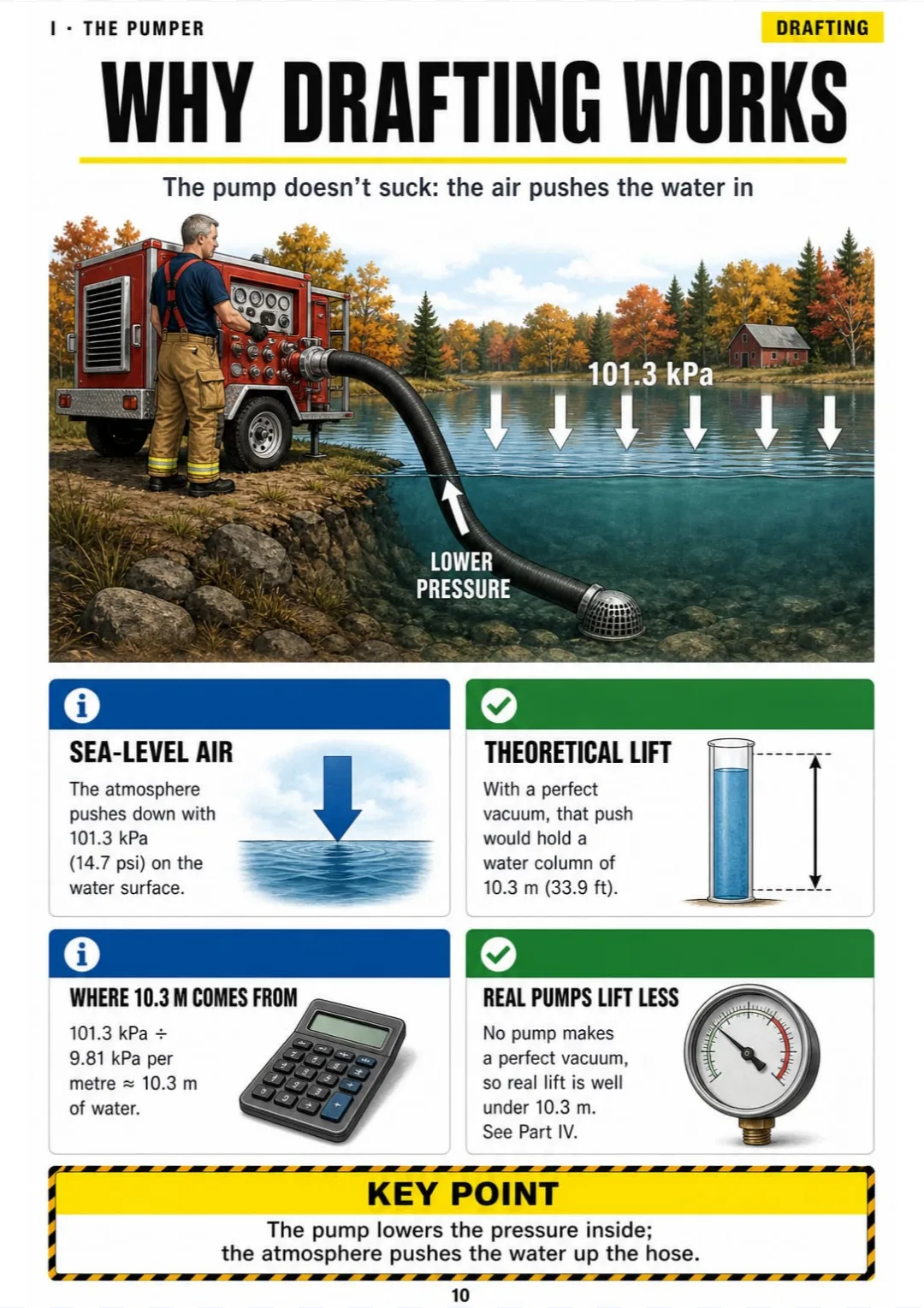
101.3 kPa at sea level holds up 10.3 m of water in theory: that's why drafting works
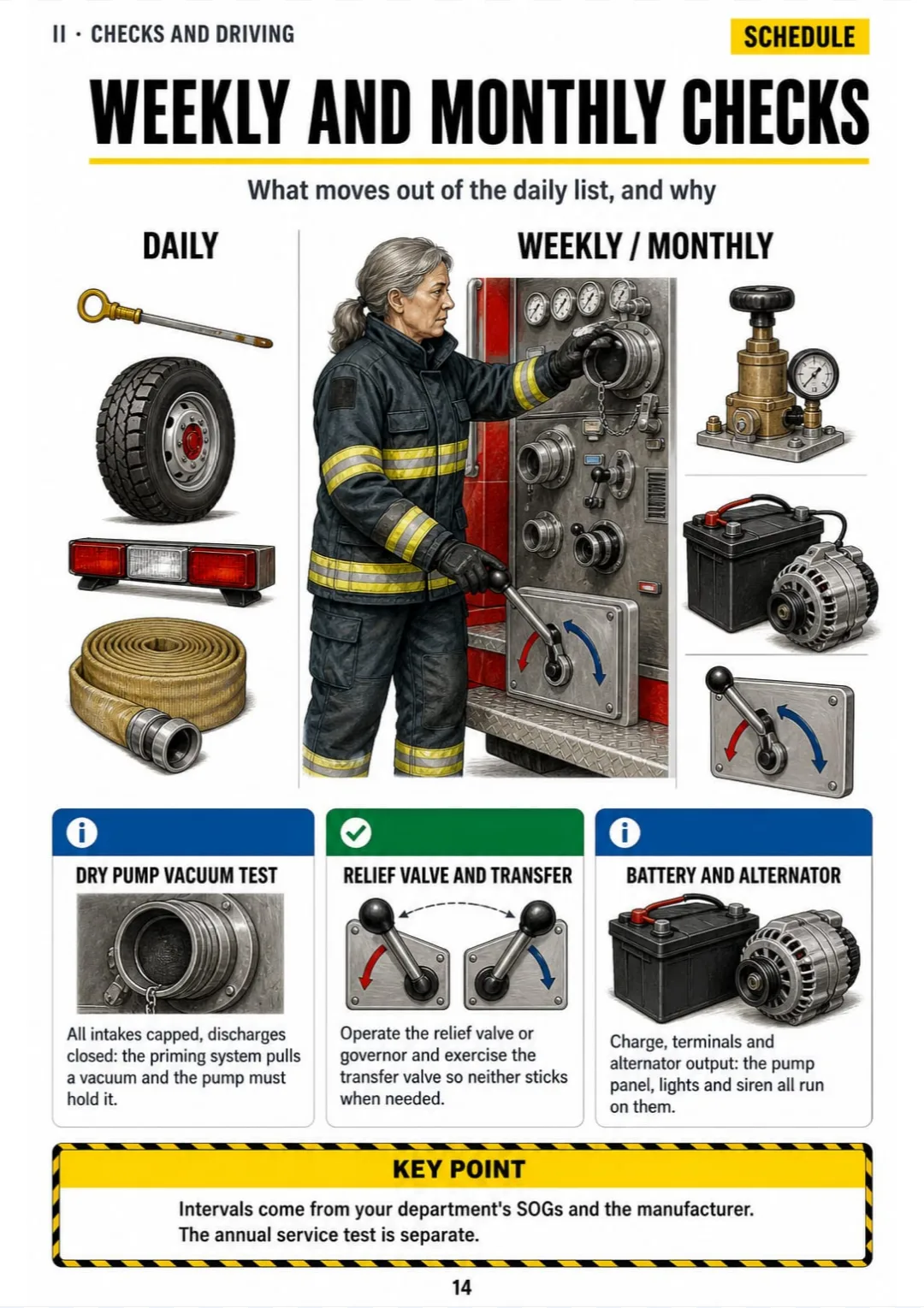
Weekly/monthly: dry pump vacuum test · relief valve · battery and alternator · transfer valve
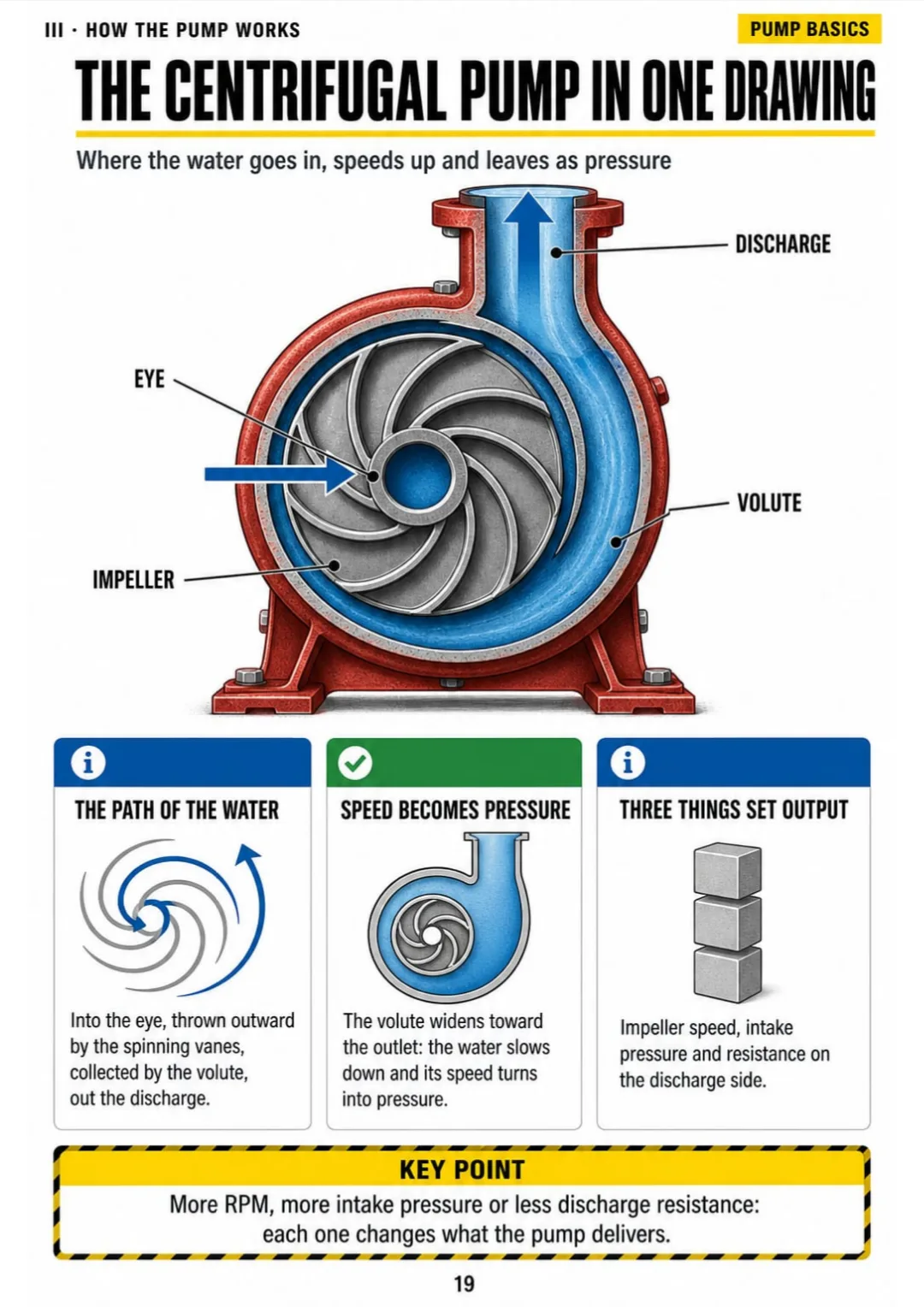
Eye, impeller, volute: the 3 parts that turn engine speed into discharge pressure.
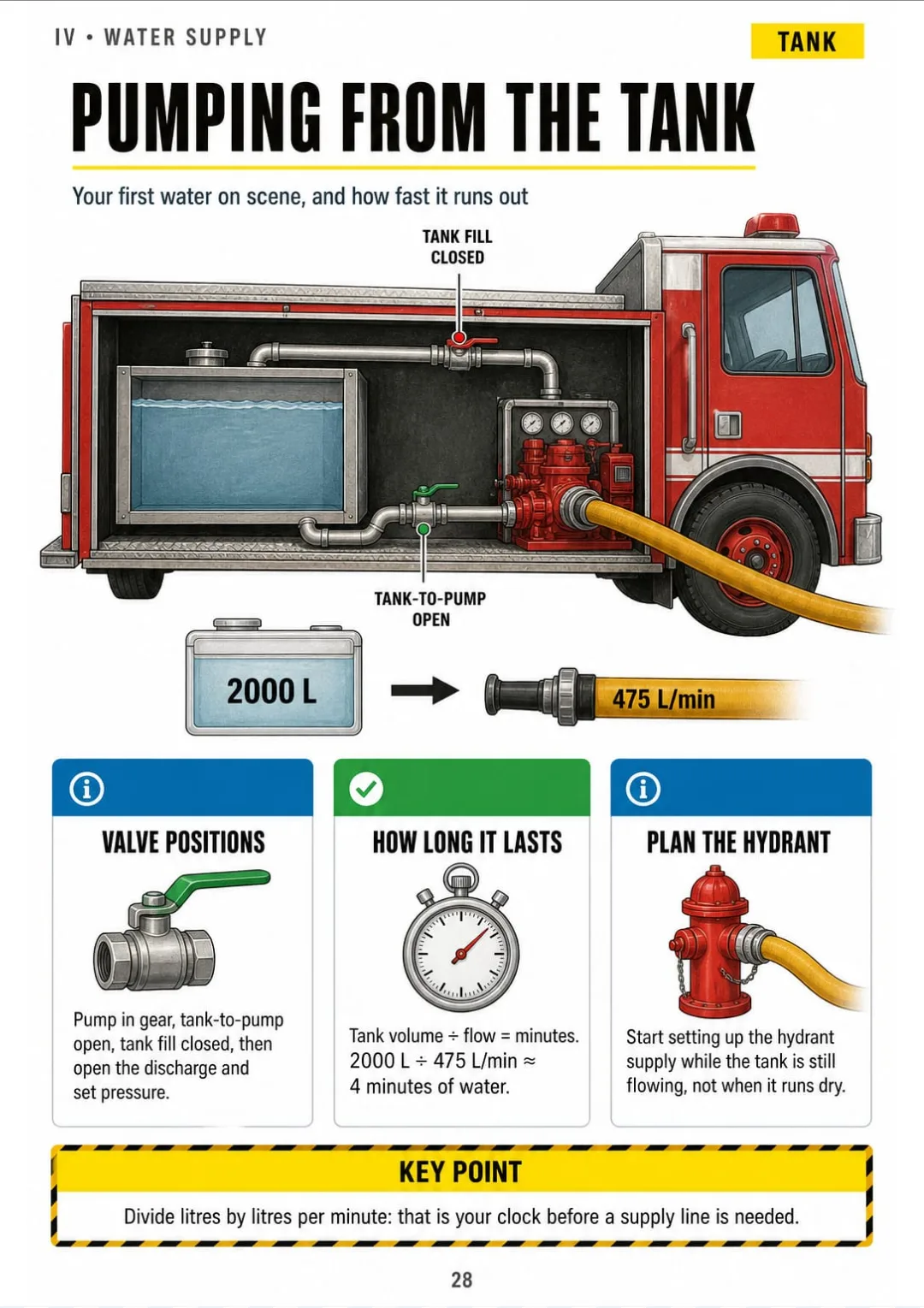
2000 L ÷ 475 L/min ≈ 4 minutes: tank-to-pump open, tank fill closed, pump in gear.
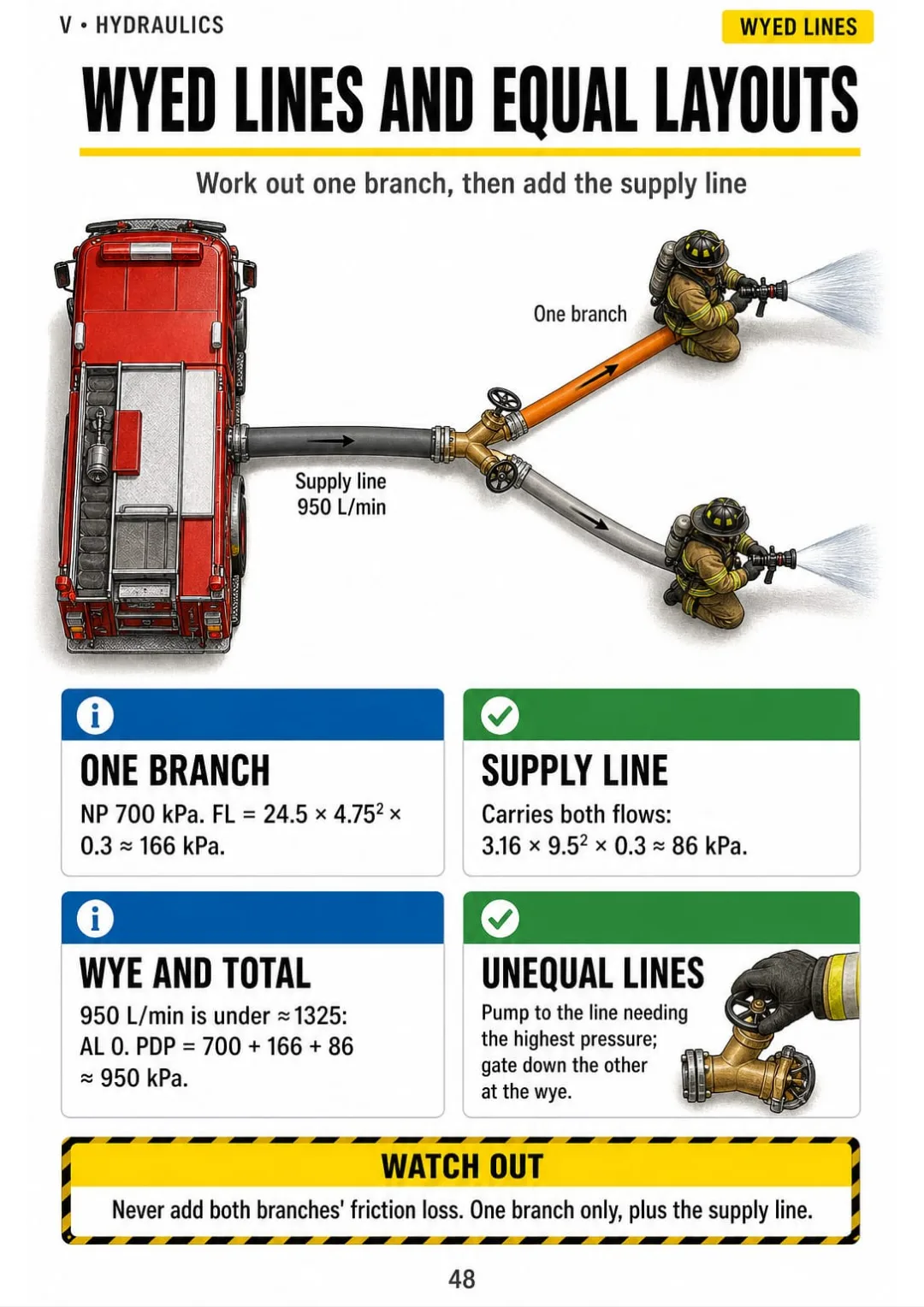
Wyed 45 mm pair from 30 m of 65 mm: PDP ≈ 950 kPa
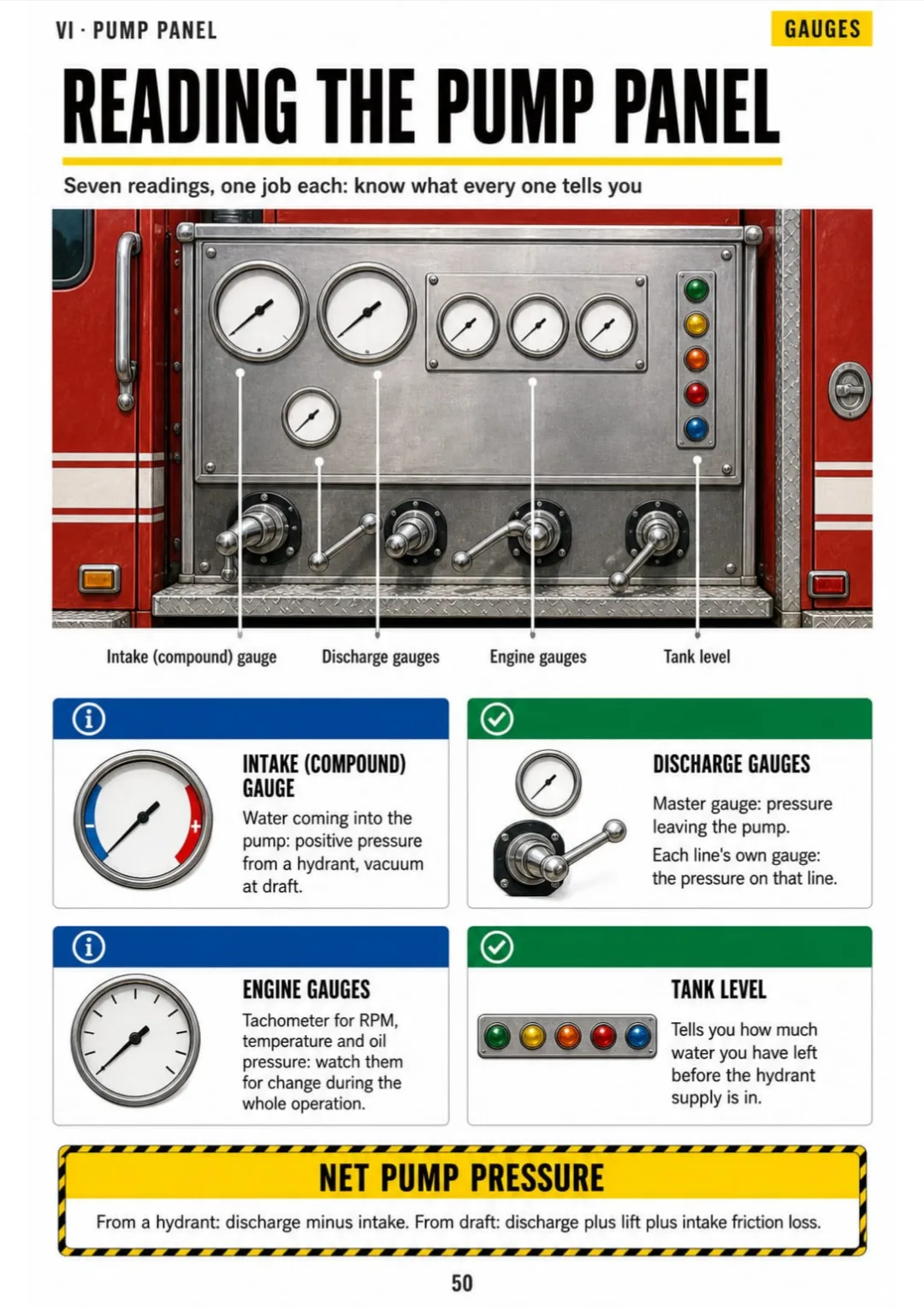
7 readings on one panel · net pump pressure = discharge − intake from a hydrant
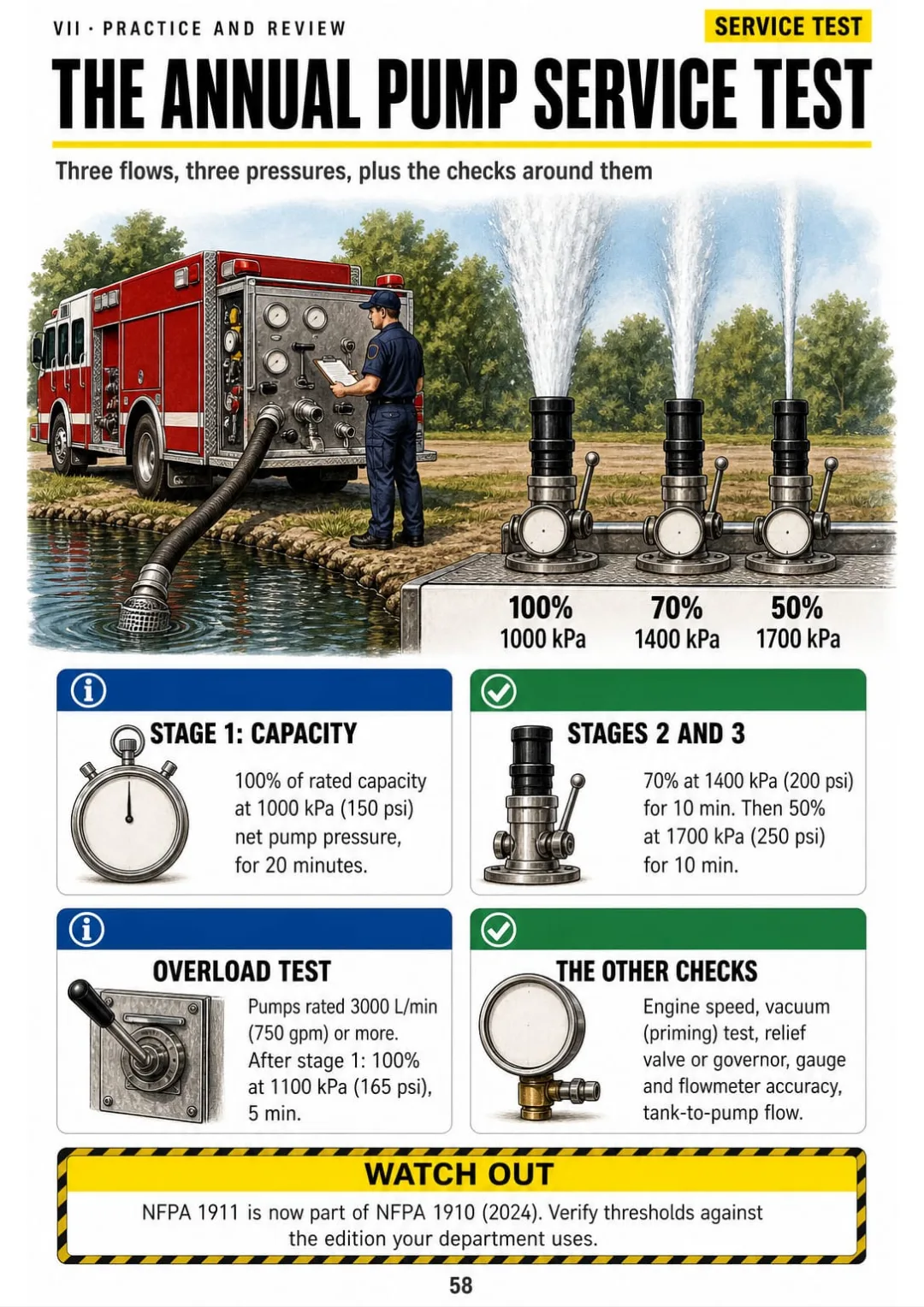
Service test: 100% at 1000 kPa, 70% at 1400 kPa, 50% at 1700 kPa net pump pressure

Swipe to see more →

These are real pages from the book. The table of contents is the full one: 7 parts and 60 topics.

The Problem Isn't You. It's How It Was Explained.

It's shift change. You're at the pumper with the check sheet, the officer is watching, and you start the walk-around. Halfway down the side you can't say if you've done the compartments yet.

The manual covers it in paragraphs: fluids in one section, tires a few pages on, the pump panel in another chapter. Read that way, there's no order to follow at the truck.

Weekly/monthly: dry pump vacuum test · relief valve · battery and alternator · transfer valve

In this book the walk-around is one page: the pumper drawn with 7 numbered stops, always in the same order: fluids, tires, lights, compartments, hose loads, pump panel, cab. You go round once and nothing gets skipped.

The rest works the same way: the centrifugal pump, pumping from the tank, PDP in 4 steps, the pump panel and the annual service test. Each topic gets its own page.

You walk the truck in order, tick it off and you don't need the manual open on the front bumper.

COMPARE FOR YOURSELF

Same Topic, Two Ways to Study It

THIS
  • The manual: line after line
  • Pumper parts explained only in words
  • You show up to the evaluation unsure
The pumper is a fire apparatus equipped with a permanently mounted fire pump of rated capacity, a water tank and a hose storage area. The pump operator's panel, generally located on the driver's side or in a top-mount position, contains the intake and discharge controls together with their associated gauges. The booster tank is normally positioned above the pump and rear axle, with the hose bed above or behind it, while preconnected crosslays are typically installed transversely above the pump compartment, with intakes and discharges arranged on both sides of the apparatus.
FOR THIS
  • The whole pumper in one drawing
  • Each part labelled where it sits on the truck
  • You see it and you get it
101.3 kPa at sea level holds up 10.3 m of water in theory: that's why drafting works
CONTENTS

Take a Look at the 7 Parts and 60 Topics

The pumper and the job, apparatus checks and driving, how the pump works, water supply, hydraulics in kPa, the pump panel, and practice and review: 64 pages, all illustrated

IThe Pumper and the Job · pp. 5-10
  1. What NFPA 1002 Asks of a Pumper Driver/Operator
  2. The Pumper, Drawn from the Outside
  3. Metric and Imperial on the Same Fireground
  4. Pressure, Flow and Head: The 3 Words of Hydraulics
  5. Static, Residual and Flow Pressure
  6. Atmospheric Pressure and Why Drafting Works
IIApparatus Checks and Driving · pp. 11-18
  1. The Daily Walk-Around in the Same Order Every Time
  2. Pump Compartment Checks
  3. Tires, Brakes and Air System
  4. Weekly and Monthly Checks
  5. Driving a Pumper: Weight, Braking and Stopping Distance
  6. Intersections and Emergency Response
  7. Backing Up with a Spotter
  8. Positioning at the Scene
IIIHow the Pump Works · pp. 19-27
  1. The Centrifugal Pump in One Drawing
  2. The Impeller and the Volute, Cut Open
  3. Single-Stage and Two-Stage Pumps
  4. The Transfer Valve: Volume or Pressure
  5. The Power Take-Off and Engaging the Pump
  6. Pump Seals: Packing and Mechanical Seals
  7. Priming Devices
  8. Pressure Relief Valve and Pressure Governor
  9. Pump Cooling: Circulator Valve and Tank-to-Pump
IVWater Supply: Tank, Hydrant and Draft · pp. 28-37
  1. Pumping from the Tank
  2. Hydrant Types: Dry Barrel and Wet Barrel
  3. Hydrant Colours and What They Flow
  4. Forward Lay and Reverse Lay
  5. Supply Hose and Intakes
  6. How Much More the Hydrant Can Give: Percent Drop
  7. Drafting Site Selection
  8. Drafting Step by Step
  9. Lift: Theoretical, Maximum and Practical
  10. Relay Pumping and Tanker Shuttle
VHydraulics in kPa: The 4-Step PDP · pp. 38-49
  1. Pump Discharge Pressure: The Formula on One Line
  2. Step 1: Nozzle Pressure
  3. Flow from a Smooth Bore Tip
  4. Step 2: Friction Loss, What Causes It
  5. The Metric Friction Loss Formula
  6. Friction Loss Coefficients by Hose Size
  7. Step 3: Elevation Pressure
  8. Step 4: Appliance Loss
  9. Worked Example: One Handline, Same Level
  10. Worked Example: Two Floors Up
  11. Wyed Lines and Equal Layouts
  12. Siamesed Lines and Master Streams
VIAt the Pump Panel · pp. 50-57
  1. Reading the Pump Panel
  2. The Compound Gauge and the Vacuum Reading
  3. Charging a Line Without Water Hammer
  4. Cavitation: How to Recognize It
  5. Changing from Tank to Hydrant
  6. Supplying a Standpipe or Sprinkler Connection
  7. Foam at the Pump Panel
  8. Shutting Down and Draining
VIIPractice and Review · pp. 58-64
  1. Pump Service Test: What Is Measured
  2. The PDP Card: All 4 Steps on One Page
  3. Ten Layouts to Work Out
  4. Answers, Step by Step
  5. Troubleshooting: Low Pressure at the Nozzle
  6. The Most Common Mistakes at the Pump Panel
  7. Checklist for the Practical Evaluation

One Page, One Topic, All Clear

Think of it this way:

The captain calls for a line two floors up: 60 metres of 45 mm hose, nozzle at 700 kPa. The crew is waiting on your number.

In the book you open the PDP page and see one pumper, one line and the 4 steps drawn on it: nozzle pressure, friction loss, elevation, appliances, in kPa with psi alongside.

2000 L ÷ 475 L/min ≈ 4 minutes: tank-to-pump open, tank fill closed, pump in gear.

Same with priming, drafting from a pond, hydrant colours, cavitation on the compound gauge and the service test: each one on its own page.

Pump Operator Illustrated: Canada is 7 parts and 60 topics, all drawn, with ten layouts to work out, the answers step by step and a checklist for the practical evaluation at the end.

What you see drawn, you don't have to memorize.

What's Inside Pump Operator Illustrated: Canada:

Ipp. 5-10

The Pumper and the Job

What NFPA 1002 asks of a pumper driver/operator, the pumper from outside, metric and imperial on the same fireground, pressure, flow and head, static, residual and flow pressure, and why drafting works.

IIpp. 11-18

Apparatus Checks and Driving

The daily walk-around in the same order, pump compartment checks, tires, brakes and air, weekly and monthly checks, driving a heavy pumper, intersections, backing with a spotter and positioning at the scene, so you walk the truck once and nothing gets skipped.

IIIpp. 19-27

How the Pump Works

The centrifugal pump cut open: impeller and volute, single- and two-stage pumps, the transfer valve, the PTO, pump seals, priming devices, relief valve and governor, and pump cooling.

IVpp. 28-37

Water Supply: Tank, Hydrant and Draft

Pumping from the tank, dry and wet barrel hydrants, hydrant colours, forward and reverse lays, supply hose and intakes, percent drop, drafting step by step, lift, relay pumping and tanker shuttles.

Vpp. 38-49

Hydraulics in kPa: The 4-Step PDP

Pump discharge pressure on one line, always in the same 4 steps: nozzle pressure, friction loss with the metric formula and coefficients, elevation and appliances. Worked examples, wyes, siamesed lines and master streams, so when the captain calls a line you already know the order of the sum.

VIpp. 50-57

At the Pump Panel

Reading the pump panel, the compound gauge, charging a line without water hammer, cavitation, tank to hydrant, supplying standpipes and sprinklers, foam, and shutting down and draining, so you know what each gauge is telling you before you touch the throttle.

VIIpp. 58-64

Practice and Review

The pump service test, the PDP card, ten layouts to work out with step-by-step answers, troubleshooting low nozzle pressure, the most common mistakes at the panel and the practical evaluation checklist.

At the end of the book: Ten layouts to work out with step-by-step answers, the PDP card and a practical evaluation checklist.
Plus: 2 Free Books

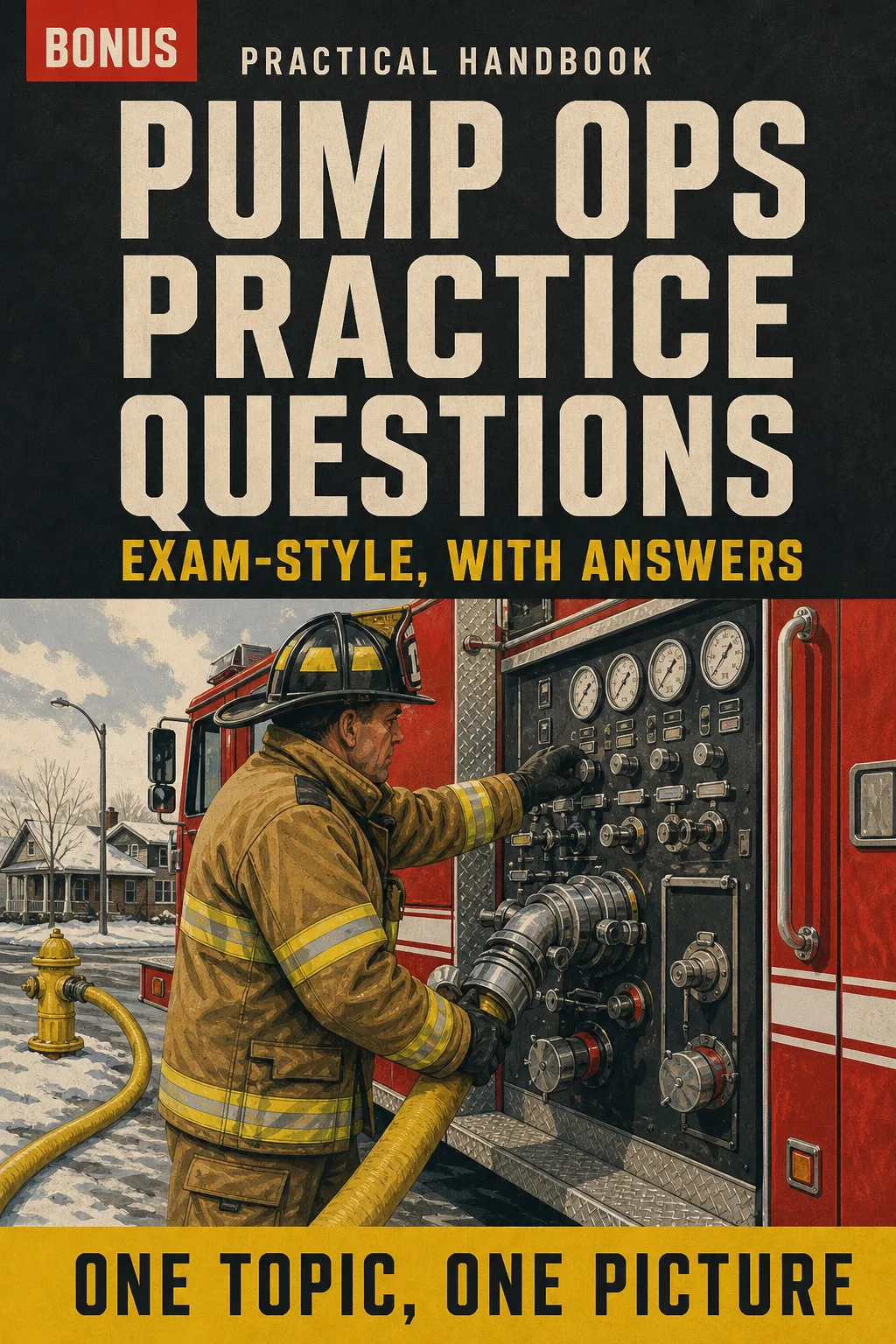
Pump Ops Practice Questions: Exam-Style, with Answers

BONUS 1: «Pump Ops Practice Questions: Exam-Style, with Answers»

Value on its own: US$ 17.90

Test yourself on pumps, hydraulics and water supply with exam-style questions, each answer explained so you see where the mistake was.

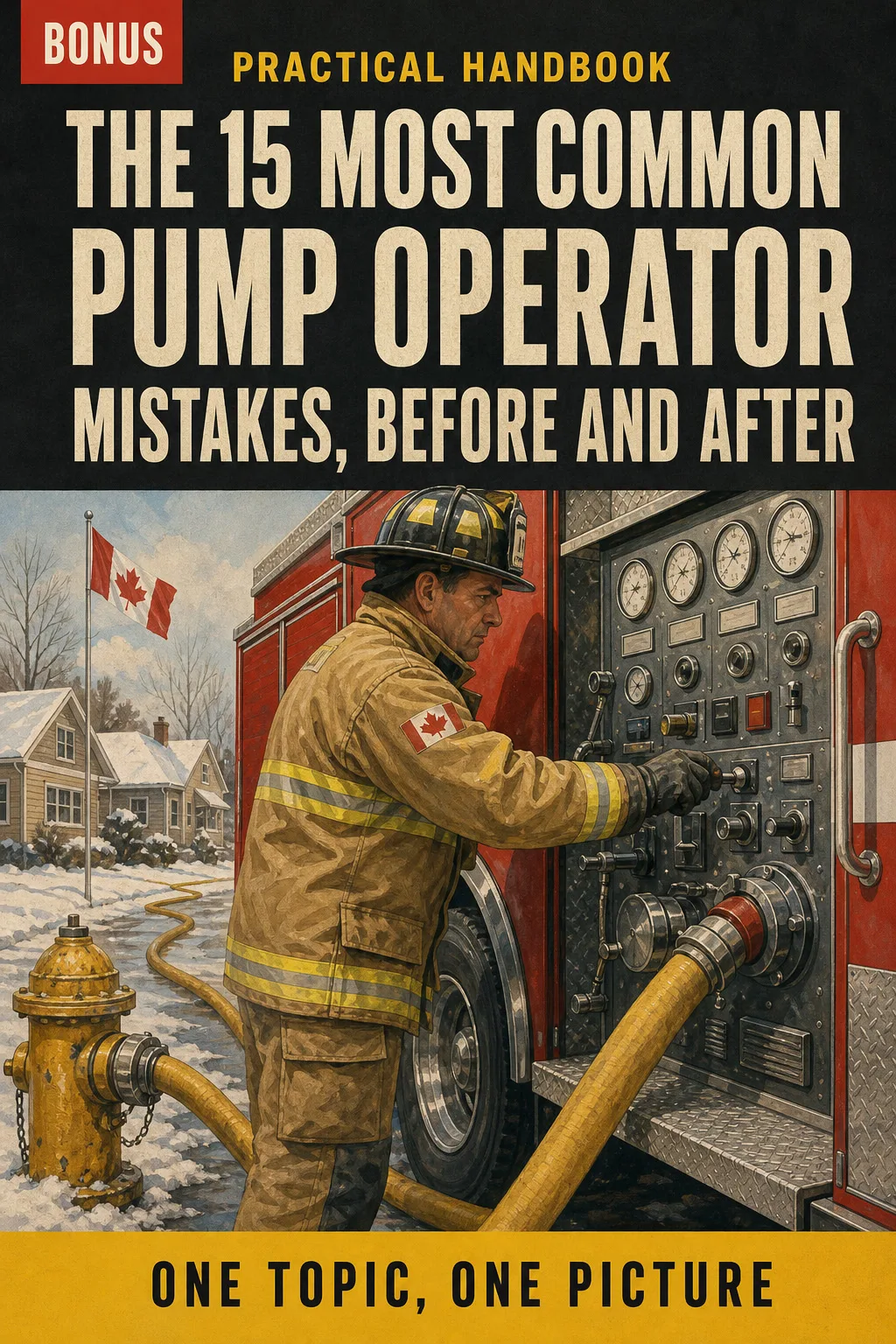
The 15 Most Common Pump Operator Mistakes, Before and After

BONUS 2: «The 15 Most Common Pump Operator Mistakes, Before and After»

Value on its own: US$ 14.90

See the mistakes that cause cavitation, water hammer and wrong pressures, each drawn wrong and then right, to review the night before.

Pump Operator Illustrated: Canada with 2 Free Books

  • Pump Operator Illustrated: Canada: 64 illustrated pagesUS$ 63
  • BONUS 1: Pump Ops Practice Questions: Exam-Style, with AnswersUS$ 17.90
  • BONUS 2: The 15 Most Common Pump Operator Mistakes, Before and AfterUS$ 14.90
  • High-resolution PDF to printIncluded
Total value US$ 95.80
YOUR PRICE:
US$ 27
You save US$ 68.80
YES, I WANT PUMP OPERATOR ILLUSTRATED: CANADA FOR US$ 27

📄 This is a digital PDF book sent to your email: nothing is printed or shipped.

Secure purchaseEncrypted payment30-day guarantee

PDF by email: We email you Pump Operator Illustrated: Canada as a PDF, together with the two free books. It's a single payment: no installments, no extra charges.

Who This Book Is For

You're studying pump operations

You're studying pump operations

Each topic of the course is one drawn page, so the pump, the water supply and the hydraulics finally fit together in the same order.

Your evaluation is coming up

Your evaluation is coming up

The PDP card, ten layouts with answers and the practical checklist let you review the whole job in a few evenings between shifts.

You already run the pump panel

You already run the pump panel

You put a drawing and a number behind what you do by feel, so you can recertify and explain it to new operators without guessing.

Everything You Get Today

US$ 95.80US$ 27
YES, I WANT PUMP OPERATOR ILLUSTRATED: CANADA FOR US$ 27

📄 This is a digital PDF book sent to your email: nothing is printed or shipped.

30DAYS
GUARANTEE

30-Day Guarantee

Try Pump Operator Illustrated: Canada for 30 days, bonus books included.

We refund everything if the file won't open, if the book isn't what you see here, if you were charged twice or if the email doesn't arrive. Just email us.

You pay once. No subscriptions.

Frequently Asked Questions

Is it for me if I already drive the pumper but freeze on the hydraulics?

Yes. It starts from the truck you know and walks the hydraulics in 4 steps, in kPa and L/min with psi alongside, for crews that still pump in psi.

Where does the content come from?

From NFPA 1002 (2017 edition), Chapters 4 and 5 (Pumper), the edition Ontario's O. Reg. 343/22 refers to, NFPA 1911 for the service test and NFPA 291 for hydrant colours. Outside Ontario, check which edition your province or academy uses. Editions, intervals and values are flagged to check against the current version and your department's SOGs.

Is it official material?

No. It's independent study material. It isn't published or endorsed by NFPA, IFSTA, the Office of the Fire Marshal or any department, and it doesn't give you a certificate or count toward certification: that comes from your evaluation.

Does it replace my course or department training?

No. It sits next to your course manual: the manual explains, this book shows each topic on one drawn page, with PDP always in the same 4 steps, in kPa with psi alongside. It's what you review between shifts and keep in the cab.

Are the practice questions the ones on the exam?

No. They're written for this book in exam style, with each answer explained. They aren't official exam questions.

When and how do I get it?

As a PDF by email, to the address you enter at checkout. The 2 bonus books come the same way.

Do I have to pay every month?

No. It's a one-time payment.

Can I have it on paper?

Yes. It's a PDF you can print at home or at a print shop and keep in the cab.

How does the refund work?

You have 30 days. We refund everything if the file won't open, if the book isn't what you see on this page, if you were charged twice or if the email doesn't arrive: just email us.

Before You Close This Page

No more rereading the manual with nothing sticking.

You see the PDP drawn in 4 steps, and that's it.

You get to the evaluation knowing where everything is.

Drawings make studying faster.

The book is right below.

One-time payment: US$ 27 · Guarantee: 30 days · PDF by email

YES, I WANT PUMP OPERATOR ILLUSTRATED: CANADA FOR US$ 27

📄 This is a digital PDF book sent to your email: nothing is printed or shipped.